

In general, people don’t like to talk about their bowel movements, but if there’s a change in your stools, your care team wants to hear about it! We had quick chat with the ARNPs at Valley’s Gastroenterology Clinic for the scoop on poop.
- How do I know if my poop is normal/healthy?
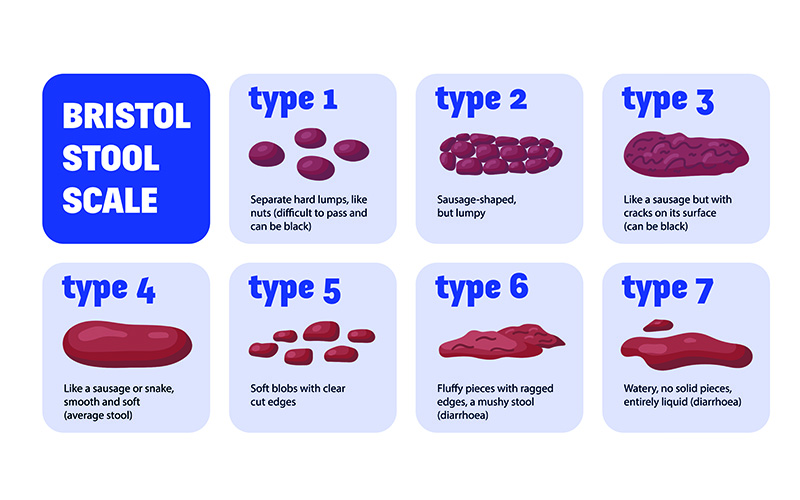
The Bristol stool scale (pictured below) is a useful guide which gives examples of different textures and shapes of poop, from very solid to very liquid. The shape/texture, color, and smell of your poop are all indicators of health.
Types 1 and 2: Constipation
Type 3 and 4: Ideal
Type 5 – 7: Diarrhea
What you eat may cause your stools to be different colors, but watch for red or black poop, which may indicate bleeding. - What are some easy things I can do to keep my poop healthy?
- Eat ahigh fiber diet. A couple of our favorite snacks are prunes and green kiwis, which can help with constipation/regularity.
- Drink lots of water.
- Walk daily.
- What are some causes of constipation and diarrhea?
This is a loaded question! Some causes can be lifestyle-related, like poor diet and stress, but diarrhea and constipation can also be caused by medications, illness, food intolerances, and so on. There is also a wide-range of gastrointestinal diseases including irritable bowel syndrome (IBS), inflammatory bowel disease (IBD), thyroid disease, celiac disease, cancer, and so on. If you’re having consistent constipation or diarrhea, or other changes to your bowel movements, please get checked out by your primary care provider (PCP) or gastroenterologist. - What are some other reasons I might need to talk my PCP or a gastroenterologist about my poop?
Changes in your bowel habits or stool caliber– thin, ribbon-like stool; rectal bleeding; and unintentional weight loss are all reasons to make an appointment. - Anything else you’d like to add?
Please stay up to date with colon cancer screening! Early detection is key so it is important to stay proactive with preventive care. Brandon Teng, MD, one of the gastroenterologists at our clinic, recently spoke with the We Are Valley Podcast about the importance of colon cancer screening and what to expect during your colonoscopy.
Content for this article is for educational purposes only and is not a substitute for professional medical advice.