
Picture yourself ten years from now. What do you want to keep doing?
Walking on the beach? Traveling with family? Getting down on the floor to play with your grandchildren—and getting back up?
Those moments depend on abilities we often take for granted: strength, balance, and a healthy brain. The way you move today can help protect those abilities for the future.
Different types of exercise offer different benefits, and many of those benefits overlap. Understanding how they work can help you get more from your efforts.
Your bones need a reason to stay strong.
Bones are living tissue. They respond to the demands placed on them. Strength training puts forces on your bones that help keep them strong.
Here’s something that may surprise you: a workout can challenge your heart without giving your bones the same challenge.
Swimming and cycling are great forms of exercise, but they place less load on your bones than activities on your feet. If you enjoy them, keep going. Adding strength training can help fill that gap.
The right challenge depends on your starting point. If you have osteoporosis or a past fracture, a professional can help you choose safe exercises and build up at the right pace.
Your brain can respond to exercise, too. In a study of 120 older adults without dementia, a year of aerobic exercise increased the size of a brain area involved in learning and memory by about 2%.
That does not mean exercise guarantees protection from dementia. But it offers an encouraging message: your brain can still respond to exercise as you age.
Strength training may support brain health, too. Studies have found improvements in thinking skills among older adults who took part in structured resistance training.
Being active can also support sleep and mood. These benefits matter when you are planning your day, learning something new, or spending time with people you love.
Your weight tells only part of the story.
Knowing that exercise helps is a good start. Understanding what your body needs makes that advice more useful.
You may know what you weigh. But do you know how much muscle you have—or how strong you are?
A body-composition assessment can help estimate muscle and body fat. One measure, called Skeletal Muscle Index, or SMI, looks at muscle amount in relation to body size. It can help flag low muscle levels that deserve closer attention.
But muscle amount is only part of the picture. Having muscle and being able to use it well are different things. Strength tests help show what your muscles can do. Looking at both gives a fuller picture of muscle health than either measure alone.
How strong is strong enough?
“Get stronger” is good advice. But it can feel like a goal with no finish line. How do you know what to aim for—or when you’ve made meaningful progress?
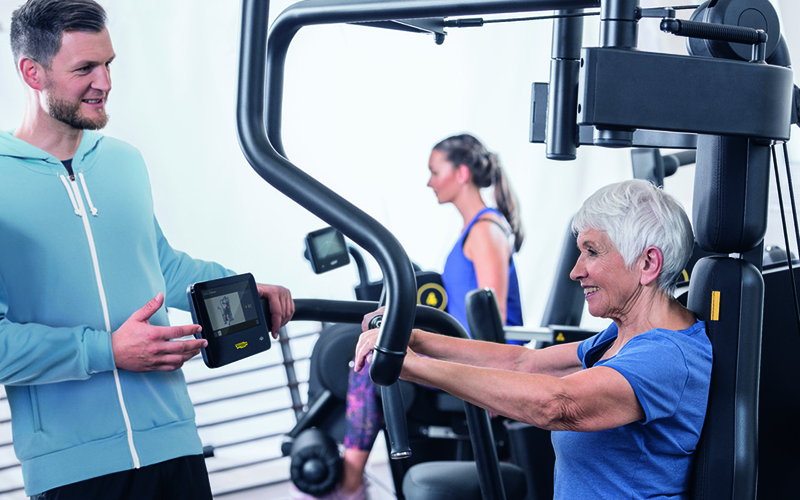
Relative strength targets help make that goal clear. They compare how much you can lift with your body weight. An exercise specialist can use this measure to set a target that fits your starting strength, health, and needs.
You now have a specific goal to work toward. Repeat testing shows how close you are getting and gives you milestones to celebrate.
Once you reach your target, your plan may focus on maintaining that strength or working toward a new goal that matters to you.
Knowing what you’re working toward—and seeing yourself get there—can help you stay motivated and engaged.
One workout can offer more than one benefit.
Strength training helps more than your muscles and bones. It can also improve blood pressure and blood sugar control, adding to its value for long-term health.
Aerobic exercise and balance practice add to those benefits. Together, they create a routine that supports your strength, heart, brain, and ability to move confidently.
For most adults, aim for:
- Strength training at least twice a week, working all major muscle groups.
- At least 150 minutes of moderate aerobic activity or 75 minutes of vigorous activity each week, or a mix of both. With a common target of averaging 250 minutes of moderate and 150 minutes of vigorous activity to illicit physiological change.
- Balance activities, especially as you get older.
At a moderate aerobic pace, you can talk but not sing. At a vigorous pace, you can say only a few words before pausing for breath. Start with what you can manage and build gradually.
An exercise prescription brings these pieces together. It tells you what to do, how often, how hard to work, and how to progress. Checking your fitness again over time helps you see what is changing and where your plan may need an adjustment.
Ready to find your starting point?
At Valley’s Lifestyle Medicine, Lifestyle365 helps turn your health goals into an individualized exercise prescription.
We use InBody body-composition assessments, strength testing, and other health and fitness measures to understand your needs. Your exercise specialist uses those results to build your plan, guide your workouts, and track your progress.
Whether your goal is a family hike, easier trips up the stairs, or more confidence on your feet, we can help you take the next step.
Learn more about Lifestyle365 and how to get started through Valley’s Lifestyle Medicine.
By Ashan Korala, Director of Wellness Operations, Lifestyle Medicine.
This article is for educational purposes only and is not a substitute for professional medical advice.